
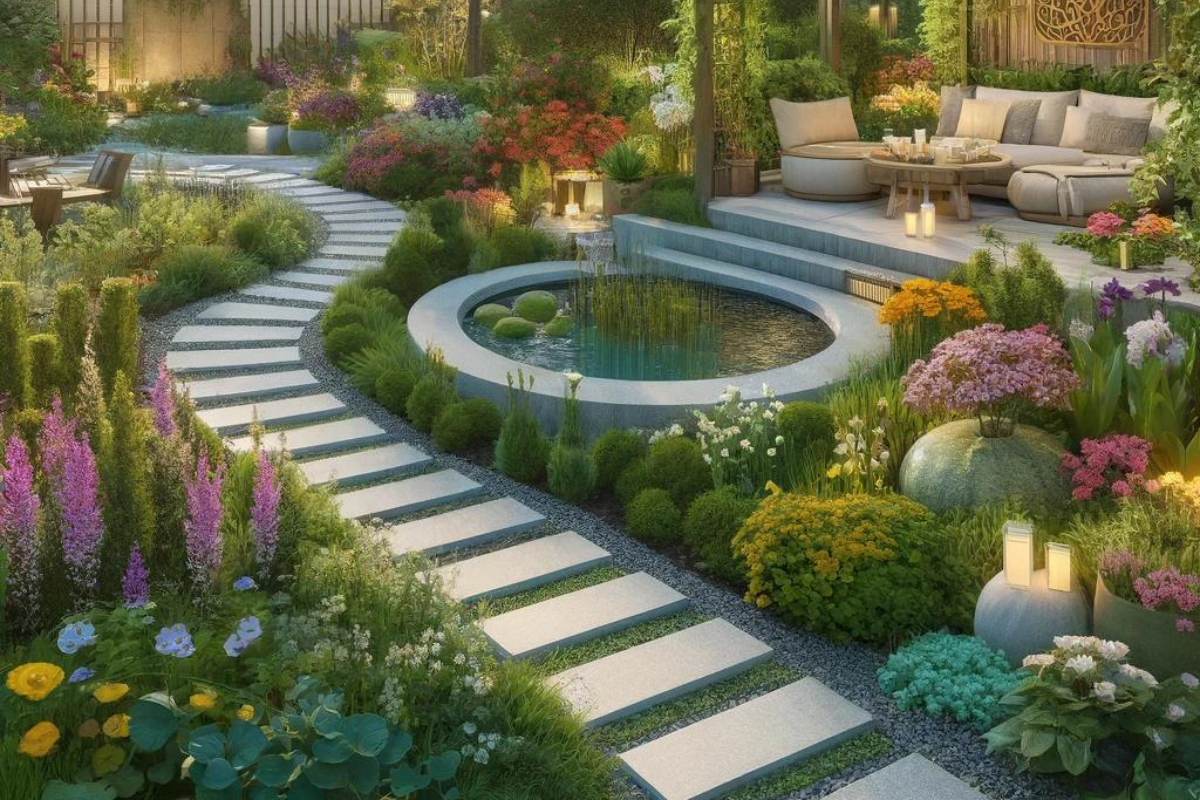
Garden as Canvas
Creative people have always understood that the garden is a form of living art. The arrangement of plants, the management of space, the interplay of textures and colors across the seasons — these are fundamentally aesthetic decisions that reflect the sensibility and vision of the gardener. Just as a painter controls what appears on the canvas, the gardener controls what grows in the space, making choices that express personality, values, and a particular relationship with nature. Weeds are, in this context, not merely a practical problem — they are a visual intrusion that disrupts the composition. Products available at desherbantpro.com help gardeners maintain control of their canvas by eliminating unwanted growth efficiently, leaving space for intentional planting to take center stage.
Color, Texture, and Structure in the Garden
Great garden design, like great visual art, is built on the interplay of color, texture, and structure. Color comes from flowers, foliage, bark, and berries across the seasons. Texture is contributed by leaf shape, plant habit, and surface materials. Structure is provided by architectural plants, clipped hedges, built features, and the hard surfaces that define the space. Weeds disrupt all three of these dimensions — they introduce uncontrolled color, invasive texture, and structural chaos into compositions that require discipline to maintain.
The Relationship Between Order and Creativity
There is a paradox at the heart of creative practice: freedom and discipline are not opposites, they are partners. The most creative work often emerges within strong structural constraints. A poet who masters the sonnet form does not feel limited by its structure — they are liberated by it, freed to focus entirely on language and meaning. Similarly, the gardener who maintains disciplined control of weeds and structure creates the conditions within which creative planting choices can be made and appreciated. A beautifully designed perennial border cannot be seen clearly when competing with a jungle of couch grass. Discipline creates the stage on which creativity performs.
Seasonal Transformation as Artistic Expression
One of the most distinctive qualities of garden art is its temporal dimension — unlike a painting or a sculpture, a garden changes continuously with the seasons. Spring brings explosive growth and the first flush of color. Summer reaches peak abundance. Autumn transforms the palette with warm tones and seed heads. Winter reveals structure in its most naked form. Managing this seasonal narrative requires both planning and active intervention, with weed-free conditions maintained throughout so that each seasonal expression can be fully realized.
Maintenance as Meditative Practice
Many creative people find that garden maintenance — including the seemingly mundane task of weed control — serves a meditative function that benefits their broader creative practice. The focused, purposeful attention required to treat a path or clear a border demands a quality of presence that quiets the busy mind. This kind of active meditation, grounded in physical space and tangible results, provides a counterbalance to the more abstract, idea-driven work of creative production. Gardeners and artists who embrace maintenance as a practice rather than a chore find that it nurtures rather than depletes their creative energy.